
Digital Signature Certificate (DSC): The Ultimate Guide
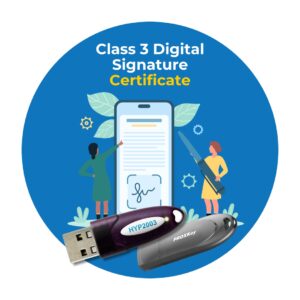
In an era where physical presence is becoming less mandatory for critical transactions, the Digital Signature Certificate (DSC) has emerged as the gold standard for establishing identity and trust online. Below is an in-depth exploration of DSCs, covering their evolution, technical specialties, and widespread applications.
Section 1: Fundamentals and Definition
Q1: What exactly is a Digital Signature Certificate (DSC)?
A Digital Signature Certificate (DSC) is the electronic equivalent of a physical ID card, such as a driver’s license or a passport. It serves as a secure digital key issued by a trusted Certifying Authority (CA) to validate and verify the identity of the person holding the certificate.
Technically, a DSC contains the user’s public key, their identity details (name, email, country, APNIC/organization), the expiration date of the certificate, and the digital signature of the issuing CA.
It is used to sign digital documents, ensuring that the receiver knows the document was created by the claimed sender and has not been altered in transit.
Q2: How is a Digital Signature different from a standard Electronic Signature?
While often used interchangeably, there is a distinct difference between the two:
- Electronic Signature (e-signature): This is a broad term referring to any electronic data that carries the intent of a signature.
It can be as simple as a scanned image of a handwritten signature, a ticked box saying “I Agree,” or a typed name at the bottom of an email. These are generally less secure and easier to forge. - Digital Signature: This is a specific, highly secure type of electronic signature.
It relies on Public Key Infrastructure (PKI) technology.
It uses a mathematical algorithm to generate a unique “fingerprint” (hash) for each document.If even a single comma is changed in the document after signing, the digital signature becomes invalid. Therefore, a DSC offers authentication, non-repudiation, and integrity, which standard e-signatures often lack.
Section 2: History and Evolution
Q3: What is the history of Digital Signatures? Where did it all begin?
The history of digital signatures is rooted in the evolution of cryptography.
- 1976 – The Theoretical Foundation: The concept began with Whitfield Diffie and Martin Hellman, who introduced the idea of public-key cryptography. They proposed a system where keys could be split into public and private components, solving the problem of secure key exchange.
- 1977 – The RSA Algorithm: Three MIT professors—Ron Rivest, Adi Shamir, and Leonard Adleman—developed the RSA algorithm. This was the first practical implementation of a digital signature scheme, allowing people to sign data with a private key that could be verified by others using a public key.
- 1988 – Lotus Notes: Lotus Notes 1.0 became the first widely marketed software package to use digital signatures for security, bringing the technology into the corporate world.
- 1999/2000 – Legal Recognition: The turn of the millennium marked the legal acceptance of digital signatures.
- USA: The ESIGN Act (Electronic Signatures in Global and National Commerce Act) was passed in 2000, giving digital signatures the same legal status as handwritten ones.
- India: The Information Technology Act, 2000 was enacted, establishing the Controller of Certifying Authorities (CCA) and legalizing DSCs.
- EU: The Electronic Signature Directive (1999) paved the way for the robust eIDAS regulation in 2014, standardizing digital trust services across Europe.
Q4: How has the technology evolved over the decades?
Initially, digital signatures were complex command-line tools used only by cryptographers. Over the years, the evolution has focused on usability and security standards:
- Transition from File-based to Token-based: Early certificates were stored on computer hard drives (soft tokens), which were vulnerable to hacking. Today, secure hardware USB tokens (FIPS certified) are the standard to prevent private key theft.
- Hashing Algorithms: The industry has moved from weaker hashing algorithms (like MD5 and SHA-1) to robust standards like SHA-256, which are currently virtually impossible to crack.
- Cloud Signatures: The modern evolution is moving toward “remote signing” or “cloud PKI,” where the keys are stored in a secure cloud Hardware Security Module (HSM), allowing users to sign via mobile devices without a physical USB token.
Section 3: Technical Specialty and Working Mechanism
Q5: How does a Digital Signature Certificate work technically?
The specialty of a DSC lies in Asymmetric Cryptography. Here is the step-by-step process:
- Key Generation: When a user applies for a DSC, a pair of keys is generated:
- Private Key: Kept secret by the user (usually on a USB token). This is used to sign documents.
- Public Key: Shared openly with the world. This is used to verify the signature.
- Hashing: When you sign a document, the software calculates a “hash” (a unique mathematical string) of the document’s content.
- Encryption: This hash is then encrypted using your Private Key. This encrypted hash is the actual “Digital Signature.”
- Verification: The receiver’s system takes the document and calculates its hash again. It also decrypts your digital signature using your Public Key to reveal the original hash.
- Match: If the hash calculated by the receiver matches the decrypted hash from the signature, it proves two things: the document was signed by you (Authentication) and the content has not changed (Integrity).
Q6: What are the specialized “Classes” of DSCs?
Certifying Authorities issue DSCs in different “Classes” based on the level of verification used to identify the applicant.
- Class 1 DSC: (Now largely obsolete or used for internal testing). It only verifies the email address and username against a database. It provides a low level of assurance and is not used for high-value legal or financial transactions.
- Class 2 DSC: (Discontinued in many jurisdictions, including India, since 2021). Previously used for tax filing, it verified identity against a trusted pre-verified database. It has largely been replaced by Class 3 to enforce higher security.
- Class 3 DSC: The highest level of specialty and security. To obtain a Class 3 DSC, the applicant must undergo a rigorous identity verification process, often involving physical appearance before a Registering Authority or a video-verification (Video KYC) process. This class is mandatory for high-stakes environments like e-tendering, e-auctions, and sensitive government filings.
Section 4: Uses and Applications
Q7: What are the primary uses of a Digital Signature Certificate?
The uses of DSCs span across government, legal, and corporate sectors.
- E-Filing Income Tax Returns: For ensuring that tax returns are filed by the authentic taxpayer, preventing fraud.
- Ministry of Corporate Affairs (MCA) Filings: All company directors and signatories must use a DSC to sign annual returns, incorporation forms, and compliance documents.
- E-Tendering and E-Procurement: This is one of the most critical uses. Government tenders require Class 3 DSCs to ensure that bids are submitted securely, cannot be altered by competitors, and are legally binding.
- GST (Goods and Services Tax): Mandatory for registering and filing GST returns for businesses.
- Import/Export Code (IEC): Traders use DSCs to apply for licenses and transact on the DGFT (Directorate General of Foreign Trade) portal.
- Employee Provident Fund (EPFO): Employers use DSCs to digitally sign and transfer provident fund claims data.
- Intellectual Property Rights: Filing for patents and trademarks electronically requires a valid DSC.
Q8: Can DSCs be used for personal or private business matters?
Yes. Beyond government mandates, DSCs are specialized for:
- Signing PDF Contracts: You can digitally sign vendor agreements, employment contracts, and invoices.
- Secure Email (S/MIME): A DSC can be used to encrypt emails so that only the intended recipient can read them, and to sign emails so the recipient knows they truly came from you.
- Banking Transactions: High-value wire transfers and corporate banking logins often use DSCs as a second factor of authentication.
Q9: What is the legal validity of a Digital Signature Certificate?
In many countries, a digital signature has the same legal status as a handwritten signature.
- In India (IT Act 2000): Section 5 of the Act grants legal recognition to digital signatures. Section 65B of the Indian Evidence Act makes digitally signed electronic records admissible in court.
- Non-Repudiation: This is a key legal specialty. If a document is signed with a valid DSC, the signer cannot legally deny signing it later, as the signature is mathematically bound to their unique private key.
Q10: What is the validity period and renewal process?
DSCs are not valid forever. They typically come with a validity of 1, 2, or 3 years.
- Why expire? To ensure that the identity data is periodically re-verified and to maintain cryptographic strength (updating keys regularly).
- Renewal: The renewal process is similar to buying a new one. You must undergo the verification (KYC) process again to prove you are still the same person and that your credentials (like organization affiliation) haven’t changed.
Q11: What happens if I lose my DSC token or password?
- Lost Token: You must immediately contact the Certifying Authority to revoke the certificate. This adds the certificate to a “Certificate Revocation List” (CRL), telling all verification software that this signature should no longer be trusted. You will then need to buy a new DSC.
- Lost Password: If you forget the password to the USB token, you typically have to format the token (which deletes the certificate) and apply for a new one. For security reasons, there is no “reset password” option that recovers the old data.
Section 6: Specialty Features & Benefits Summary
Q12: Why should a business invest in Digital Signature Certificates?
- Cost and Time Efficiency: It eliminates the need to print, manually sign, scan, and courier documents. A contract can be signed and emailed in minutes.
- Green Initiative: It supports a paperless office environment.
- Data Integrity: It guarantees that the data has not been tampered with. If a hacker alters a digitally signed invoice, the signature breaks, alerting the receiver.
- Global Acceptance: Modern DSCs are compatible with global document formats like Adobe PDF (PAdES), Microsoft Word, and XML (XAdES).
Q13: Who issues these certificates?
DSCs are not issued by the government directly but by Licensed Certifying Authorities (CAs).
- In India, CAs include eMudhra, Capricorn, Pantasign, IDSign, etc., all regulated by the CCA.
- Globally, companies like VeriSign (Symantec), Entrust, and DigiCert are prominent CAs.
Conclusion
The Digital Signature Certificate is more than just a piece of technology; it is the backbone of the modern digital trust ecosystem. From its historical roots in 1970s cryptography to its current status as a legal necessity for Class 3 government filings, the DSC offers a unique combination of security, speed, and legality. Whether you are a director of a company, a government contractor, or a professional filing taxes, understanding the specialty and correct usage of a DSC is essential for navigating the digital world securely.